Food Contact Silicone Adhesive vs Standard RTV: What’s the Real Difference?
“They’re both silicone, look the same, no smell — why is the price several times higher?” This is the most common question from procurement teams in food machinery, small appliances, and cookware industries.
The gap between food contact grade silicone adhesive and standard RTV (room-temperature vulcanizing silicone) isn’t in appearance — it’s in the compliance evidence chain and the formulation safety boundary. Choosing the wrong one means customs detention in the EU, customer returns, or regulatory penalties — losses far exceeding the adhesive price difference.
This guide uses a “problem + market context + solution” approach, combined with ODAKE food contact adhesive solutions, to clarify the essential differences.
1. The Problem: Why Can’t Standard RTV Be Used for Food Contact?
The “Safety Blind Spots” of Standard RTV
Standard RTV performs excellently in industrial sealing, construction caulking, and electronic potting — but its formulation design was never aimed at food safety.
| Comparison | Standard RTV | Food Contact Grade Silicone Adhesive |
|---|---|---|
| Formulation Goal | Bond strength, weather resistance, cost | Migration control, sensory neutrality, compliance |
| Catalyst System | May contain peroxide residues | Platinum-catalyzed preferred, lower residue risk |
| Additives | May contain fungicides, non-food-grade pigments | Ingredients on authorized lists or migration-assessed |
| Migration Testing | Typically not performed | Mandatory (overall + specific migration) |
| Compliance Documents | None | DoC (Declaration of Compliance) + test reports |
Standard RTV may contain peroxide catalyst residues, fungicides, or non-food-grade pigments that can migrate into food under contact or high-temperature conditions. Even if the base silicone rubber is similar, the additive differences disqualify it from food contact use.-11-12
A Common Cognitive Trap
“Non-toxic” does not equal “food contact safe.” Standard RTV datasheets say “non-toxic, non-corrosive” — meaning no acute harm under industrial use conditions. The core metric for food contact safety is migration — how much substance leaches into food when the cured adhesive contacts it. Standard RTV suppliers typically don’t provide this data, and don’t have it.-10
2. Market Context: Why Must We Distinguish Now?
Tightening Regulations Make Compliance Documents a Hard Threshold
China’s GB 4806.15-2024 “National Food Safety Standard — Adhesives for Food Contact Materials and Articles” took effect on February 8, 2025. In the EU, food contact materials must comply with EU 10/2011 (plastics) or the 1935/2004 framework regulation, and a Declaration of Compliance (DoC) is mandatory in B2B transactions. For the US market, FDA 21 CFR 177.2600 (rubber articles for repeated use) and NSF/ANSI 51 (food equipment materials) are the references.-2-4–
Adhesives without corresponding compliance documents cannot legally be used in food contact product assembly or sealing, regardless of performance.
Stricter Downstream Customer Audits
Food machinery OEMs, small appliance brands, and commercial kitchen equipment manufacturers increasingly require adhesive suppliers to provide:
Migration test reports (overall and specific migration)
DoC (Declaration of Compliance)
Catalyst system statement (platinum vs peroxide)
Batch traceability documentation
ODAKE’s Positioning in Food Contact Adhesives
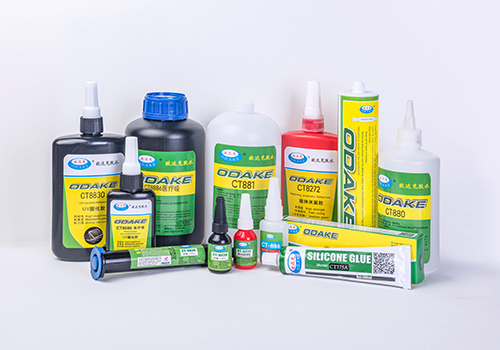
ODAKE offers multiple adhesive solutions for food contact applications, covering UV adhesives, instant adhesives, threadlockers, and more. For food contact grade silicone adhesive applications, ODAKE follows a design principle of platinum-catalyzed systems where applicable and controlled migration risk, supported by complete REACH/ROHS and food contact-related certification documents — suitable for food machinery sealing, small appliance assembly, and cookware component bonding.
3. Solution: Three Steps to Select Genuine Food Contact Grade Silicone Adhesive
Step 1: Look at the Standard Number, Not Marketing Words
“Food grade,” “baby grade,” “safe silicone” are marketing language. The compliance basis is the standard number.
| Market | Standard to Confirm |
|---|---|
| China | GB 4806.15-2024 or GB 4806.16 (silicone rubber) |
| EU | EU 10/2011 / 1935/2004 + DoC |
| US | FDA 21 CFR 177.2600 / NSF/ANSI 51 |
Request test reports citing the standard number, not brochures with only “FDA certified” wording.
Step 2: Ask About the Catalyst System
Platinum-catalyzed systems are the industry consensus for food contact and medical grade silicones, with significantly lower residue risk than peroxide-catalyzed systems. Ask suppliers directly: “Is your silicone adhesive platinum-catalyzed or peroxide-catalyzed?” A qualified food contact supplier should answer clearly and provide evidence.-11
Step 3: Confirm Migration Test Data
Request migration test reports aligned with the target market standard, focusing on:
Overall migration within limits
Specific migration (heavy metals, volatile organic compounds) compliant
Test conditions covering actual use conditions (temperature, time, food type contacted)
“Food contact grade” claims without migration test data have no probative value in customer audits and regulatory inspections.
ODAKE Selection Recommendations
| Application | Recommended Direction | Key Confirmation |
|---|---|---|
| Food machinery sealing | Food contact silicone adhesive | Platinum catalyst + migration report + DoC |
| Small appliance food contact parts | Food contact UV/instant adhesive | FDA/REACH/ROHS + cure completeness |
| Cookware component bonding | Food contact silicone adhesive | GB 4806.15 or FDA 177.2600 |
| Opaque structural sealing | Food contact RTV (confirm grade) | Clarify “direct contact” vs “indirect contact” |
4. FAQ
Q1: Can standard RTV be used for food contact after boiling in water?
A: No. Boiling only removes some surface volatiles — it cannot solve the fundamental issues of catalyst residues and additive migration in the formulation. Food contact compliance depends on the formulation itself and migration test data, not post-treatment.
Q2: Supplier says they have FDA certification but won’t provide a report. Is that credible?
A: Be cautious. The FDA manages food contact substances through regulatory compliance, not by issuing “certificates”. Request test reports citing specific regulatory sections (e.g., 21 CFR 177.2600), not documents with only “FDA certified” wording.-13
Q3: How much more expensive is food contact grade silicone adhesive than standard RTV?
A: The price difference depends on the specific model and order volume. Platinum catalyst systems, migration testing, and compliance documentation management all add cost. From a product compliance risk and customer audit pass rate perspective, this premium is a necessary investment.
Q4: How to obtain compliance documents for ODAKE food contact grade adhesives?
A: Contact ODAKE for REACH/ROHS test reports, food contact-related certification documents, and migration test data for specific products (confirmed per target market).
5. Summary
Food contact silicone adhesive vs standard RTV — what’s the real difference? Remember this logic:
Standard RTV: Industrial formulation + no migration data + no DoC = Not for food contact. Food contact grade silicone adhesive: Platinum-catalyzed preferred + migration test reports + Declaration of Compliance = Complete compliance evidence chain. Select by standard number and test data, not “non-toxic” marketing words.
ODAKE food contact adhesive solutions cover silicone sealing, UV bonding, and instant bonding for food contact applications, with complete certification documents and selection support. To confirm compliance documents for your specific application, contact us.